The F.R.I.E.N.D.S. mnemonic for fistula provides a framework for identifying factors that may affect healing in complex fistula cases:
F – Foreign body
R – Radiation
I – Infection or inflammation
E – Epithelialization
N – Neoplasm
D – Distal obstruction
S – Steroids
Applying F.R.I.E.N.D.S. to Fistula Management
Identifying factors that may affect healing is one part of managing a complex fistula. Clinicians must also consider the characteristics of the fistula, drainage, surrounding skin condition, and the ability to maintain effective containment.
These considerations can help guide strategies for isolating enteric effluent, protecting surrounding tissue, and maintaining a dependable seal.
Using the F.R.I.E.N.D.S. framework alongside assessment of the wound and its management challenges can help support clinical decision making throughout fistula care.
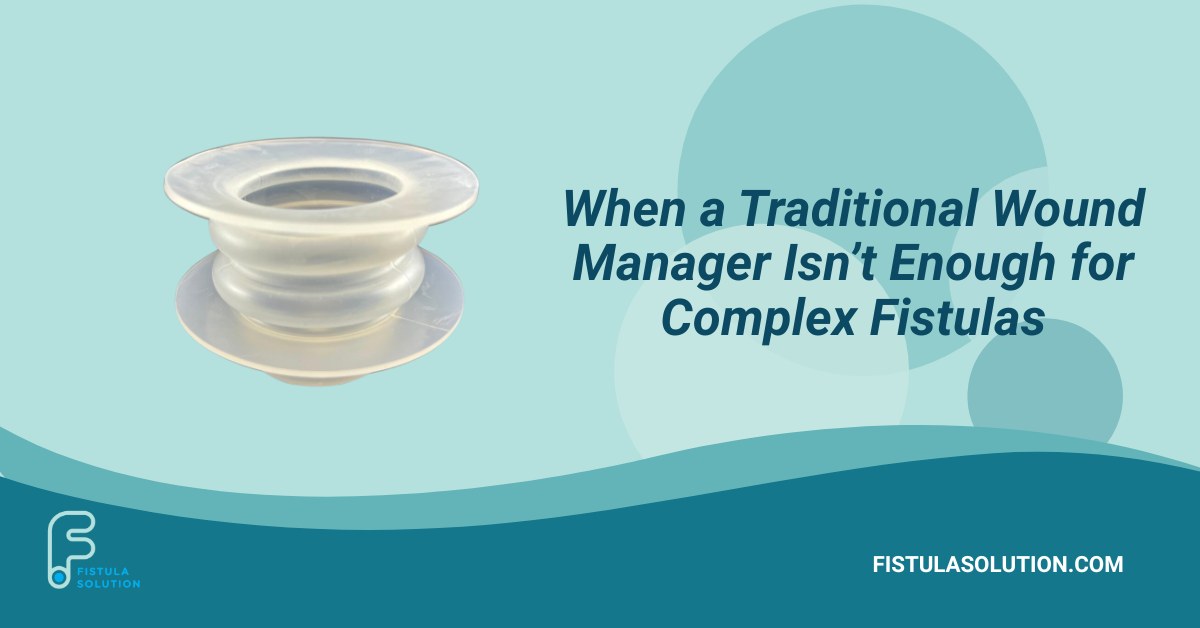
Traditional wound managers work well in many situations, but some fistulas present challenges that make maintaining a reliable seal difficult. Irregular wound contours, high-volume drainage, and persistent leakage can quickly lead to skin breakdown and frequent dressing changes.
When these challenges occur, clinicians often need to look beyond repeated adjustments to the same management approach. The focus shifts to protecting the surrounding skin, isolating enteric effluent, and maintaining a more dependable seal that supports ongoing wound care.
The Wound Crown was developed for these difficult situations. By helping separate the fistula opening from the surrounding wound, it can assist with effluent isolation, improve seal reliability, and help protect periwound skin. This allows clinicians to adapt their management strategy when traditional wound managers are no longer meeting the needs of the wound.
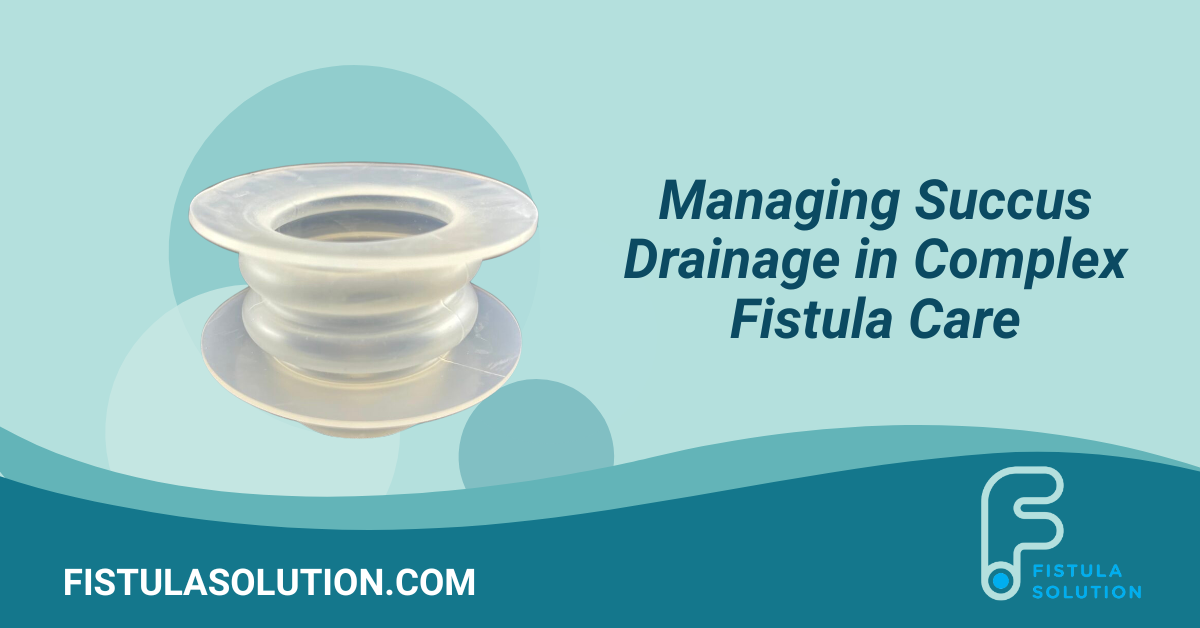
No single solution is appropriate for every patient, but recognizing when it is time to consider a different approach can make managing complex fistulas more effective for both the care team and the patient. Understanding how to contain succus drainage can also help guide clinical decision making.
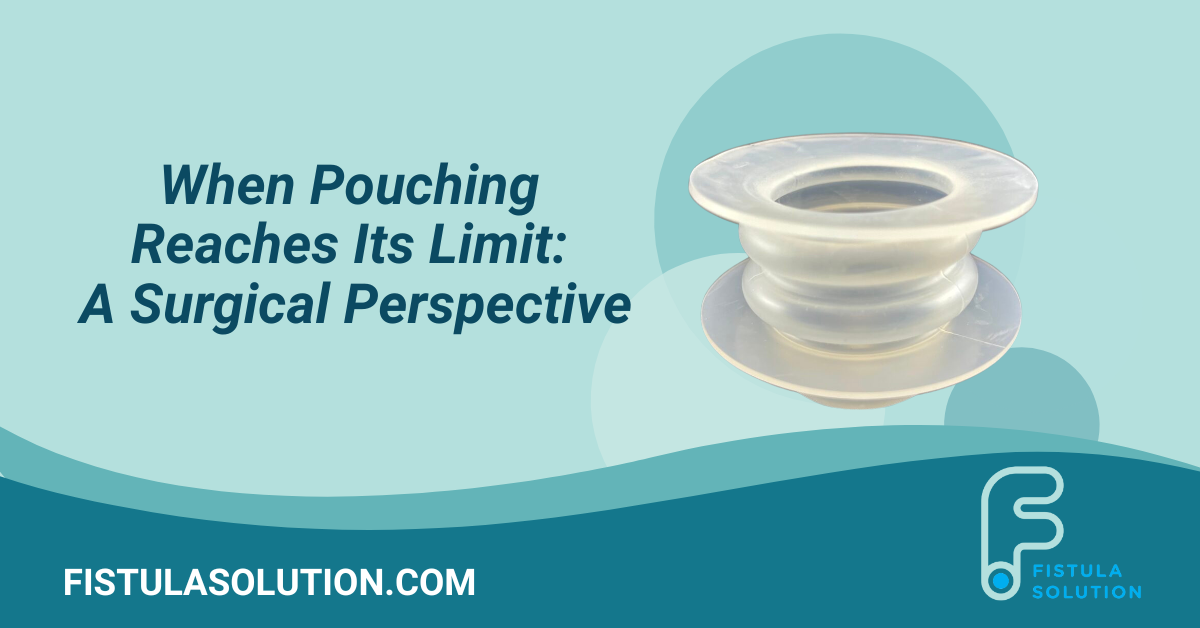
Pouching remains the standard for ostomy and fistula management. However, in complex abdominal cases—particularly with open wounds, retracted stoma, or high-output fistulas—pouching alone may not provide reliable protection.
In these scenarios, isolation devices serve as a critical adjunct, enabling effluent to be controlled and consistently directed into a pouch.
Why Pouching Fails
Pouching challenges are typically driven by:
Open peristomal wounds
Retraction or difficult fistula/stoma site
High-volume effluent
These factors can compromise adhesion, leading to leakage and frequent appliance failure.
Recognizing When there is a Need
A change in strategy should be considered when:
Leakage interferes with wound healing or patient mobility and quality of life
Dressing and pouch changes become frequent and/or resource-intensive
Peristomal or periwound breakdown persists
These challenges are often due to a dressing limitation, not a technique issue.
Isolation as an Adjunct to Assist in Pouching
Isolation devices are not an alternative to pouching—they are a tool to make pouching viable in hostile environments.
They function to:
Physically separate effluent from vulnerable tissue
Create a controlled channel directing output into the pouch
Protect surrounding tissue to support healing
Where Fistula Solution Fits
Fistula Solution devices, including the Wound Crown®, are designed to assist in successful pouching.
They provide a structured method to isolate effluent and direct it into a pouch, helping restore control in difficult-to-manage cases and supporting surgical and wound care objectives.
For More Information
Want to learn more? For information on device availability within your hospital system or to discuss clinical coordination, contact Fistula Solution at info@fistulasolution.com.
The Story Behind Fistula Solution’s Life-Changing Devices
When it comes to managing fistulas, the standard tools haven’t changed much in over a century. Pouches, gauze, adhesives, and creatively improvised techniques are still commonly used.
But patients deserve more.
A Long History of Improvising
Fistulas have been around for centuries. One of the earliest documented cases dates back to 1825, when military physician Dr. William Beaumont treated a young man, Alexis St. Martin, who had been shot in the abdomen with a musket. With no modern options available, he used rags and leather strapping to manage the effluent.
Shockingly, similar improvised methods are still used today.
“Over the years of wound management, we really haven’t come all that far,”
explains Mary Anne, RN, Complex Abdomen Specialist and Inventor of the Wound Crown, Fistula Funnel, and Isolator Strip. “Many fistulas are still managed with gauze, frequent dressing changes, and adhesives.”
But complex abdominal wounds, especially enteric fistulas, require something built for the job.
Real Solutions for Enterocutaneous Fistula Care
Fistula Solution was created to address the gap between what patients need and what was available. The result is a lineup of clinician-designed devices that isolate effluent, protect skin, and support real healing.
These are not general supplies. They are purpose-built tools for patients facing real complexity.
The Fistula Solution Device Lineup
Fistula Solution currently offers three devices, each designed for specific clinical needs:
Wound Crown Ideal for single, small-bowel fistulas and high output ostomies. Named after Mary Anne herself, the “Fistula Queen.”
Fistula Funnel Designed for smaller fistulas or those located near wound edges.
Isolator Strip A flexible 14" strip that can be looped to isolate multiple fistulas or shaped to span wide wound beds.
A closer look at the Fistula Solution device lineup: purpose-built tools that isolate effluent, protect skin, and support healing in complex abdominal wounds
Each device directs effluent into a pouching system, giving patients the freedom to eat, move, and heal without constant dressing changes or skin breakdown.
Why Our Approach to Enterocutaneous Fistula Care Works
Before these devices existed, clinicians were MacGyvering — cutting, taping, and adapting whatever was available.
“Now we have something that actually fits,”
says Mary Anne.
The devices from Fistula Solution are:
Easy to apply
Pre-formed for common clinical needs
Designed to isolate the fistula or ostomy and protect the skin
No more guesswork. No more frustration. Just real tools that support better outcomes.
What Clinicians Are Hoping to Achieve
Whether it’s a surgeon, WOC nurse, or wound care team, the goal remains the same:
Isolate the fistula. Contain the effluent. Support healing.
Fistula Solution helps make that process more predictable, more effective, and more aligned with the realities clinicians face daily.
Ready to Learn More?
Fistula Solution is proud to support healthcare providers across the country with devices that make a difference in complex wound care.