
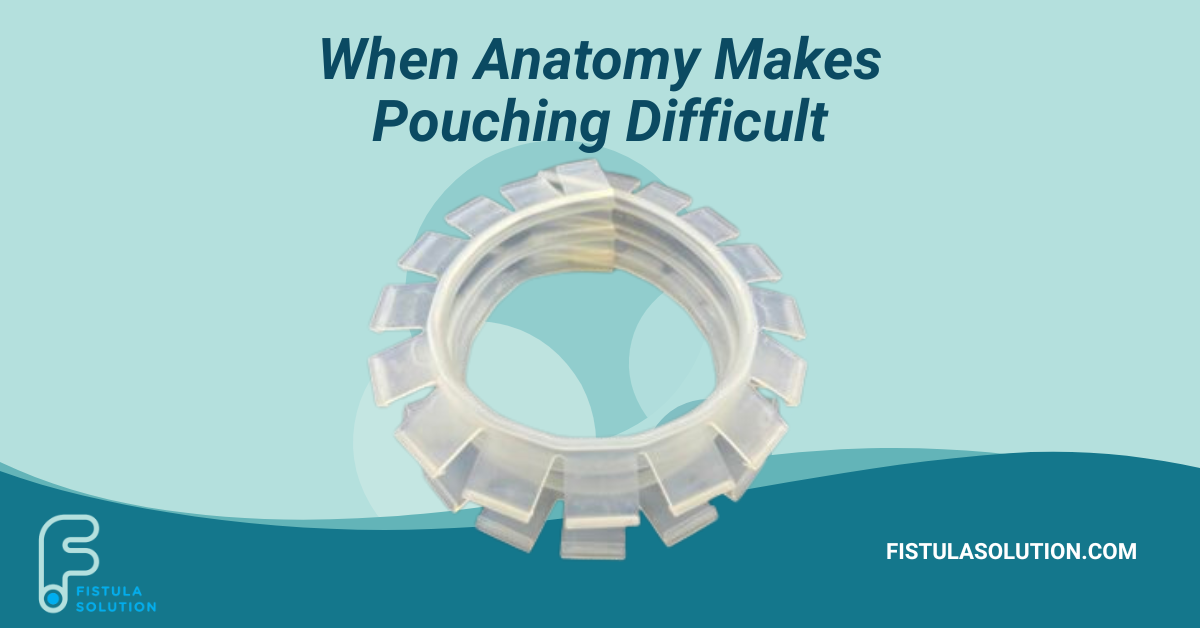
When Anatomy Makes Pouching Difficult

Pouching remains the standard approach for managing ostomies and fistulas. However, certain anatomical presentations can make achieving and maintaining a reliable seal difficult.

Challenges That May Impact Pouching Success

Factors that may contribute to pouching difficulties include:

  • Injured peristomal or perifistula skin
  • Retracted stomas or fistulas
  • Irregular wound contours
  • High-volume effluent
  • Frequent leakage

These challenges can increase dressing changes, contribute to skin breakdown, and make containment more difficult.

When to Consider a New Approach

Early indicators may include:

  • Recurrent leakage
  • Persistent skin breakdown
  • Difficulty maintaining a seal
  • Frequent appliance changes
  • Increasing time spent managing output

Recognizing these challenges may help support an improved management approach.

Isolation Devices are Designed to Assist in Successful Pouching

By separating effluent from vulnerable tissue and directing output into a pouch, isolation devices can help clinicians manage cases where anatomy makes containment difficult.

Clinicians managing these challenges may also be interested in our article, When Pouching Reaches Its Limit: A Surgical Perspective.

For More Information

For information on device availability within your hospital system or to discuss clinical coordination, contact Fistula Solution at info@fistulasolution.com.

Learn more about the Wound Crown®, Fistula Funnel®, and Isolator Strip® in the Knowledge Center.
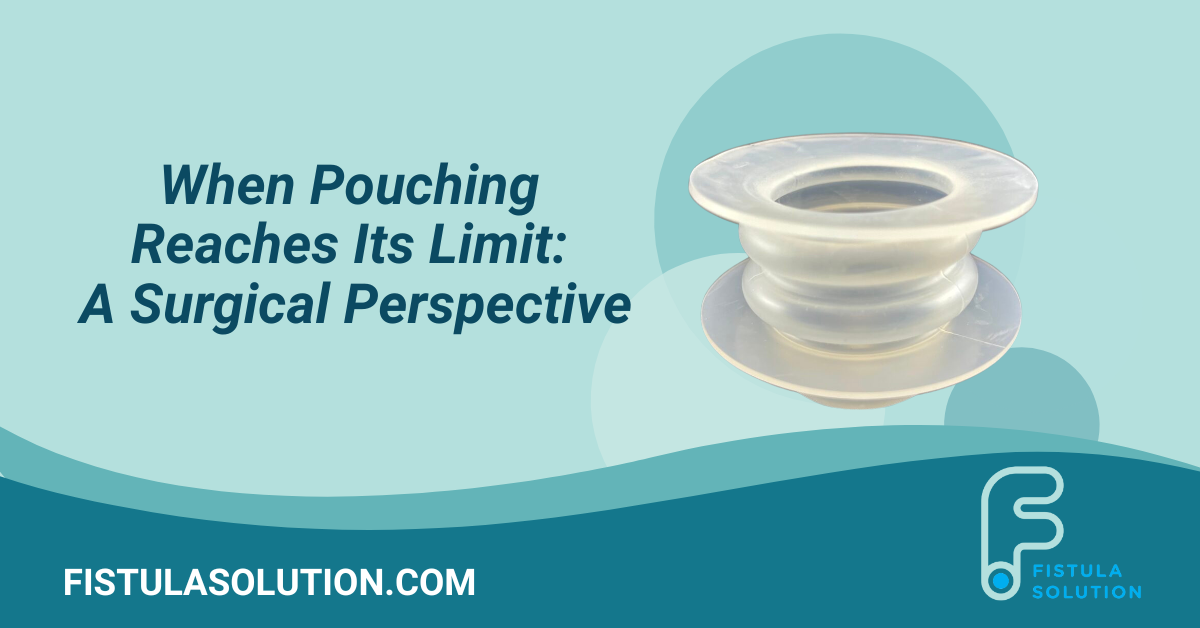
When Pouching Reaches Its Limit: A Surgical Perspective

Pouching remains the standard for ostomy and fistula management. However, in complex abdominal cases—particularly with open wounds, retracted stoma, or high-output fistulas—pouching alone may not provide reliable protection.

In these scenarios, isolation devices serve as a critical adjunct, enabling effluent to be controlled and consistently directed into a pouch.


Why Pouching Fails

Pouching challenges are typically driven by:

  • Open peristomal wounds
  • Retraction or difficult fistula/stoma site
  • High-volume effluent

These factors can compromise adhesion, leading to leakage and frequent appliance failure.


Recognizing When there is a Need

A change in strategy should be considered when:

  • Leakage interferes with wound healing or patient mobility and quality of life
  • Dressing and pouch changes become frequent and/or resource-intensive
  • Peristomal or periwound breakdown persists

These challenges are often due to a dressing limitation, not a technique issue.


Isolation as an Adjunct to Assist in Pouching

Isolation devices are not an alternative to pouching—they are a tool to make pouching viable in hostile environments.

They function to:

  • Physically separate effluent from vulnerable tissue
  • Create a controlled channel directing output into the pouch
  • Protect surrounding tissue to support healing

Where Fistula Solution Fits

Fistula Solution devices, including the Wound Crown®, are designed to assist in successful pouching.

They provide a structured method to isolate effluent and direct it into a pouch, helping restore control in difficult-to-manage cases and supporting surgical and wound care objectives.


For More Information

Want to learn more? For information on device availability within your hospital system or to discuss clinical coordination, contact Fistula Solution at info@fistulasolution.com.