Open Abdomen Planning Webinar

The webinar Planning for an Open Abdomen: Strategies and Best Practices to Increase Efficiency and Decrease Readmissions will be held live on July 1st and 8th.

This activity is designed for physicians, nurse practitioners, physician assistants, nurses, physical therapists, and other allied healthcare professionals involved in the surgical closure, or prevention and management of wounds.

Learning objectives are to:

  • Investigate gaps in current interventions for managing open abdominal wounds
  • Illustrate via cases, techniques tips and pearls on how to manage open abdomen
  • Examine the role of closed incision negative pressure wound therapy in reducing the number of follow up appointments and hospital readmissions

Click here to register for Wednesday, July 1, 2020 12:00pm to 1:00pm ET or Wednesday, July 8, 2020 1:00pm to 2:00pm ET.

Reimagine Solutions for Fistula Management at WOCNext

Attend Reimagine Solutions for Fistula Management: The Patient, The Fistula, The Skin! during WOCNext on June 6th at 2:45 PM EDT.

Fistulas can be complex and challenging for WOC Nurses. This session will provide solutions for fistula management with primary focus on effluent containment and perifistular skin protection. Come prepared to virtually learn best practices utilizing case-based scenarios during this innovative presentation by an expert clinician and WOC nurse.

Team Management of Enteroatmospheric Fistulas at Virtual SAWC Spring

The SAWC Spring 2020 educational program will now be delivered as a virtual experience.  Engage from your home to gain practical applications and insight on enteric fistula management.

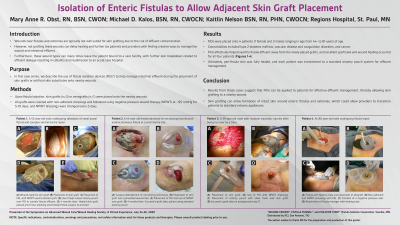
Mary Anne Obst and Kristen Lindvall from the Complex Abdominal Reconstruction (CARS) team at Regions Hospital will present Team Management of Enteroatmospheric Fistulas on July 26th.  They will share the CARS methodology for fistula patient care during the 6 to 18 month wait time before definitive surgical treatment.  They will cover wound care, nutritional support, psychosocial counsel, medical management, and surgical planning.

AAST Webinar on Entero-cutaneous and Entero-atmospheric Fistulas

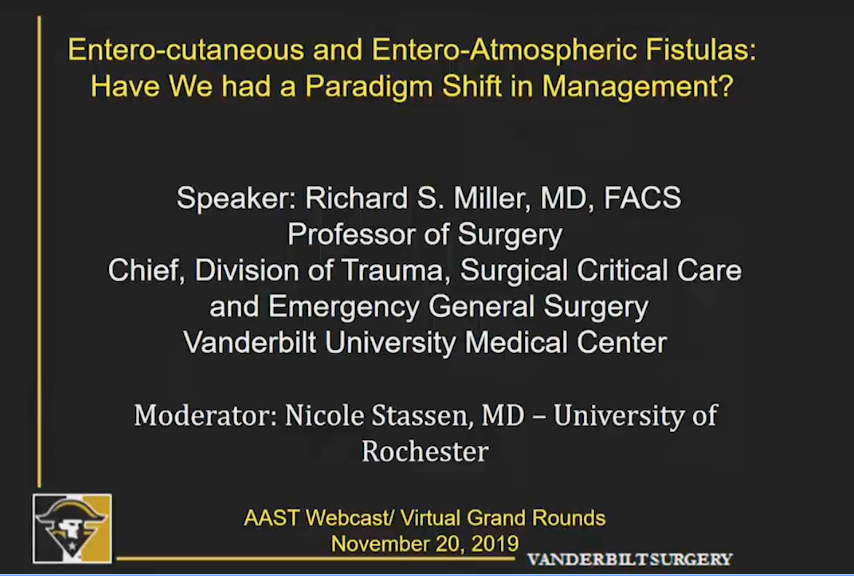
The webinar Entero-cutaneous and entero-atmospheric fistulas: Have we had a paradigm shift in management? is now available online.

Dr. Richard Miller, Chief, Division of Trauma and Surgical Critical Care at Vanderbilt Medical Center presents a comprehensive overview of enteric fistula management and makes a strong case for "feeding the gut".

The webinar is part of the American Association for the Surgery of Trauma Virtual Grand Rounds educational program.

Click here to watch.

2020 Surgical Infection Olympics in Madrid

The 2020 Surgical Infection Olympics will be hosted by Madrid, Spain during the European Congress on Surgical Infections in September.

The Olympics and subsequent Surgical Infection Society Europe (SIS-E) conference will cover not only the recent aspects of known issues, but also new frontiers of surgical infections. Surgical researchers, surgical residents, nurses, infection control practitioners and surgeons are encouraged to participate in or contribute to the congress.

Conference themes include:

  • Management & closure of the open abdomen
  • Interactive cases on surgical infections
  • Global surgery symposium: Damage Control Surgery
  • Instillation therapy with negative pressure in the open abdomen
  • Reducing sepsis-related mortality

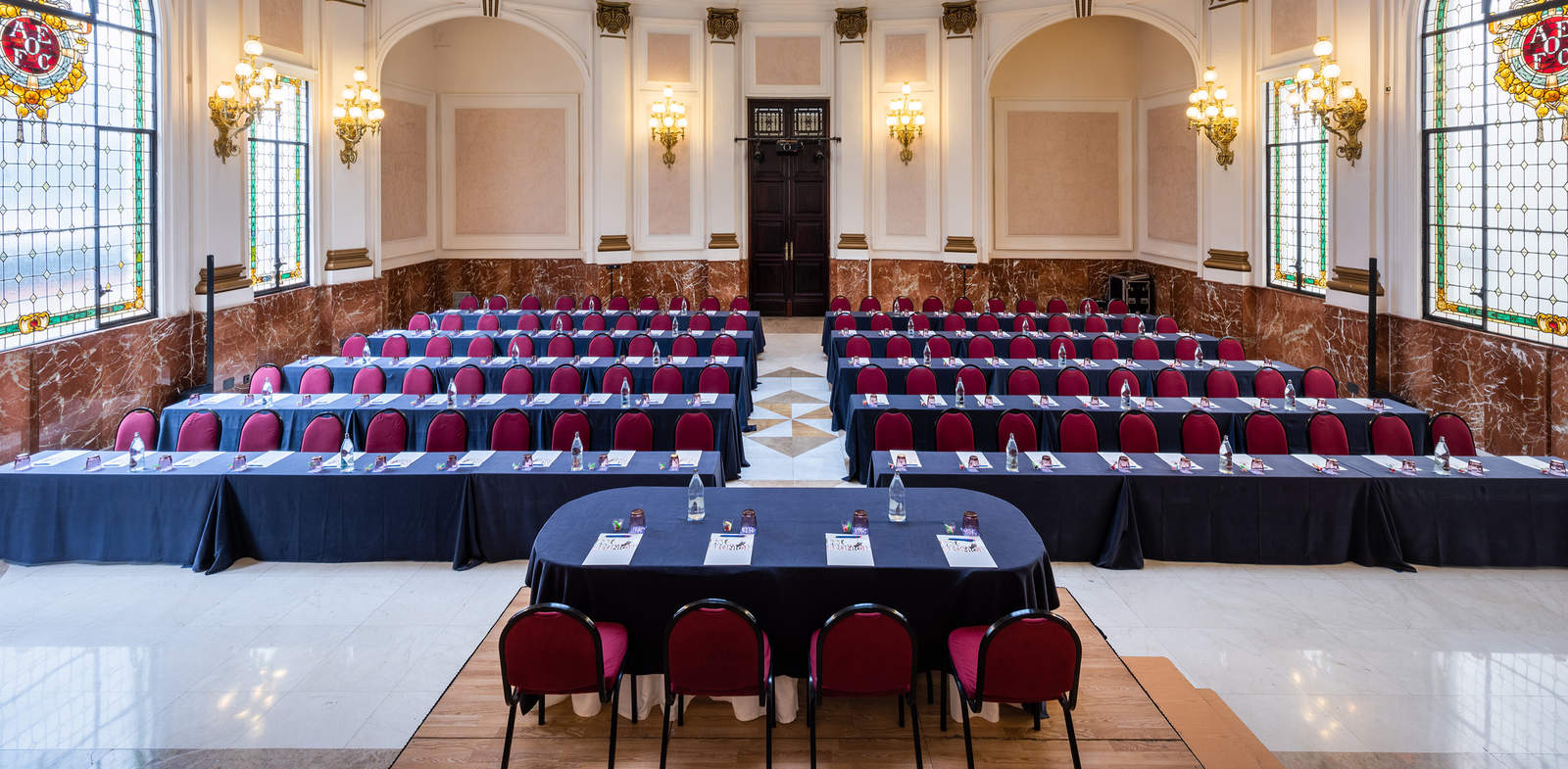
The 2020 SIS-E Olympics and conference will be September 2-4 at the Tryp Madrid Atocha Hotel in Madrid, Spain.

Visit the Surgical Infection Society Europe website for more information.

Nurse Discount for Abdominal Wall Reconstruction Conference

Discounted registration is available for nurses who want to attend the upcoming Abdominal Wall Reconstruction Conference.   Nurses can use the special promo code AWRN20 to receive $100 off registration fees.

MedStar Georgetown University Hospital’s 12th Annual Abdominal Wall Reconstruction (AWR) Conference is a comprehensive symposium providing an in-depth understanding of the complexity of AWR and repair techniques. Education includes abdominal wound management and alternative resources in abdominal wall reconstruction. This is a unique opportunity for attendees to network with colleagues in their field and interact with expert faculty. The agenda includes:

  • Live lectures, presentations, panel discussions and interactive Q&A sessions
  • Poster abstract authors’ session
  • Multiple symposia
  • Gloves-on cadaver workshop

The 2020 conference will be June 4-6 at the Mandarin Oriental in Washington D.C. Visit the AWR website to see the full conference agenda.

Hernia Surgery Summit in March

Columbia Comprehensive Hernia Center's 11th Annual Hernia Surgery Summit is focused on reconstruction of abdominal wall defects, which remains one of the most challenging dilemmas facing surgeons. Even though ventral hernia repair remains one of the most common procedures performed, there is little consensus as to the best surgical technique, prosthetic material of choice, or strategies to repair complex defects.

Learning objectives include:

  • Minimally Invasive Hernia Repairs
  • Robotic Hernia Repairs
  • Complex open abdominal wall reconstruction techniques
    • Open (traditional) component separation
    • Laparoscopic and periumbilical sparing component separation
    • Posterior component separation and transversus abdominis release (TAR)
    • Laparoscopic and Robotic Totally Extraperitoneal Retromuscular Repairs
  • Para-stomal and other difficult hernia repairs
  • Reconstructions in setting infection, contamination, enterocutaneous fistulas, loss of abdominal domain
  • Umbilical and inguinal hernia repairs
  • Comprehensive review of groin repairs and groin pain management
  • Plastic surgery considerations for difficult soft tissue scenarios

The 2020 conference will be March 5-7 at the The Cliff Lodge in Snowbird, Utah.  Visit the Hernia Surgery Summit website to see the full conference agenda.

Advanced Fistula Concepts at the Abdominal Wall Reconstruction Conference

The Advanced Concepts session at the upcoming Abdominal Wall Reconstruction Conference includes soft tissue and hernia repair topics and a pair of exciting enteric fistula presentations.  Mary Anne Obst, WOCN and Complex Abdomen Specialist at Regions Hospital, will present "EC Fistulas, Stomas, & Complex Wounds: A Nursing Perspective".   Mary Anne will be followed by Eric Pauli, MD from Penn State Health Milton S. Hershey Medical Center who will present "Surgical Management of the EC Fistula Patient".

The Advanced Concepts session will conclude with a panel discussion including best practices in fistula management.

The 2020 Abdominal Wall Reconstruction conference will be June 4-6 at the Mandarin Oriental in Washington D.C. Visit the AWR website to see the full conference agenda.

Fistula Management Team at SAWC Spring 2020

It takes a village to care for fistula patients.

Experience a multidisciplinary team approach to fistula management at SAWC Spring.

Mary Anne Obst and Kristen Lindvall from the Complex Abdominal Reconstruction (CARS) team at Regions Hospital will present Team Management of Enteroatmospheric Fistulas.  They will share the CARS methodology for fistula patient care during the 6 to 18 month wait time before definitive surgical treatment.  They will cover wound care, nutritional support, psychosocial counsel, medical management, and surgical planning.

Belted Pouching with Fistula Solution Devices

A high-output enterocutaneous fistula or ostomy may produce two to seven liters of effluent per day which can be devastating to the skin and can cause pain, infection and emotional isolation.

Using a belted ostomy pouch with Fistula Solution devices can be a good effluent management option, particularly when:

  • The perifistula topography of a patients body, creases, or scars make adhesive pouching difficult, or
  • Ostomy pouches will not adhere to excoriated and weeping peristomal skin.

In these cases intestinal effluent can cause further irritation and wound formation of perifistula skin.  To seal and protect the skin from effluent, Fistula Solution devices can be compressed around the patient’s enteric fistula or ostomy with a belted pouching system.

The following "how-to" steps illustrate the use of the Fistula Funnel in these challenging situations.

belt 1

1. Tailor the Fistula Funnel by cutting along the exterior scribe line to form a skirt. The skirt will help form a good seal around the fistula or ostomy and protect the surrounding skin from effluent.

Scribe line

2. Check the fit of the tailored Fistula Funnel to ensure it will seal when compressed to the surface of the body.

The visible portion of the compression area is indicated by the yellow shape.

belt 3

3. Center fistula or stoma in opening and compress the device.  The fistula or stoma should be visible through the device opening after placement on the patient.

belt 2

4. Apply a belted ostomy pouch appliance to compress the device to seal and protect skin and capture intestinal effluent.

belt 4

This technique can be used to protect the skin from effluent and enable healing when other methods may not work and can dramatically improve quality of life for the patient.