
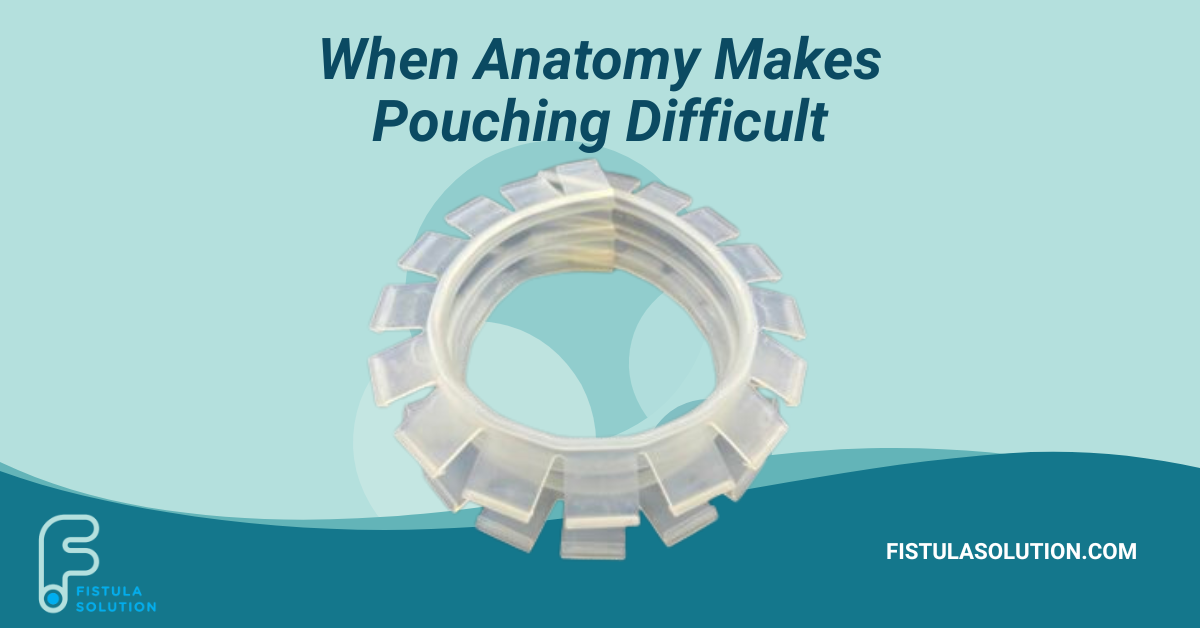
When Anatomy Makes Pouching Difficult

Pouching remains the standard approach for managing ostomies and fistulas. However, certain anatomical presentations can make achieving and maintaining a reliable seal difficult.

Challenges That May Impact Pouching Success

Factors that may contribute to pouching difficulties include:

  • Injured peristomal or perifistula skin
  • Retracted stomas or fistulas
  • Irregular wound contours
  • High-volume effluent
  • Frequent leakage

These challenges can increase dressing changes, contribute to skin breakdown, and make containment more difficult.

When to Consider a New Approach

Early indicators may include:

  • Recurrent leakage
  • Persistent skin breakdown
  • Difficulty maintaining a seal
  • Frequent appliance changes
  • Increasing time spent managing output

Recognizing these challenges may help support an improved management approach.

Isolation Devices are Designed to Assist in Successful Pouching

By separating effluent from vulnerable tissue and directing output into a pouch, isolation devices can help clinicians manage cases where anatomy makes containment difficult.

Clinicians managing these challenges may also be interested in our article, When Pouching Reaches Its Limit: A Surgical Perspective.

For More Information

For information on device availability within your hospital system or to discuss clinical coordination, contact Fistula Solution at info@fistulasolution.com.

Learn more about the Wound Crown®, Fistula Funnel®, and Isolator Strip® in the Knowledge Center.
Surgical Tissue Revision Around Stomas: Why Effluent Control Matters

When a fistula or ostomy becomes “unpouchable,” consider soft tissue revision followed by management with a fistula isolation device.

Open wounds, uneven or scarred tissue, retracted stomas, and fistulas under wound edges can make reliable pouching impossible. Recurrent leakage leads to maceration, prolonged hospitalization, and patient frustration.

This is where RISP provides structure.

What Is RISP?

RISP stands for:

Revise. Isolate. Skin Graft. Pouch.

It is a staged surgical technique designed to reconstruct peri-stomal or peri-fistula soft tissue and ultimately transition the patient to a standard, easy-to-manage ostomy appliance.

The sequence matters:

1. Revise

Surgically revise soft tissue to fully expose the stoma or fistula and create a viable pouching surface (without entering the peritoneum).

2. Isolate

Control and divert effluent using isolation devices and negative pressure wound therapy (NPWT) to heal the wound.

3. Skin Graft

Place a skin graft around the stoma or fistula once output is controlled. Protect the graft with continued isolation and NPWT support.

4. Pouch

Transition to a standard ostomy appliance once the graft has healed, restoring independence and reliability.

Why Isolation Is Central

Isolation is the turning point in RISP. Effluent control creates the conditions necessary for graft survival and predictable reconstruction.

RISP highlights the importance of multidisciplinary collaboration and environmental control in complex abdominal reconstruction.

For a visual demonstration of the RISP technique, watch this video:
https://youtu.be/c8ojt1zck-c

For additional information about RISP or isolation strategies in complex fistula cases, contact Fistula Solution.